
Avoid The $2,500 Mistake: How to Audit Your Hotel Security Policies
February 13th 2026
Hotel Employee Theft & Master Key Security Risks
The massive financial risk of lost master keys and internal theft is a silent, creeping threat that can devastate a property's bottom line and ruin its reputation overnight. When physical access falls into the wrong hands, the operational and financial repercussions go far beyond a simple inconvenience.
Imagine the sinking feeling when a shift manager reaches for their keyring and finds nothing but an empty pocket. That single moment of panic can trigger a catastrophic chain of events, instantly compromising the safety of every guest and staff member in the building. A lax master key security policy is an open invitation for disaster. The risk of theft and financial loss due to stolen or misplaced keys cannot be overstated; a missing credential opens the door to unauthorized room entry, stolen physical assets, and massive liability lawsuits. To combat the massive financial risk of lost master keys and internal theft, hoteliers must transition from outdated, disorganized practices to stringent hotel key control procedures backed by commercial-grade hardware.
Hospitality Industry Employee Theft Statistics
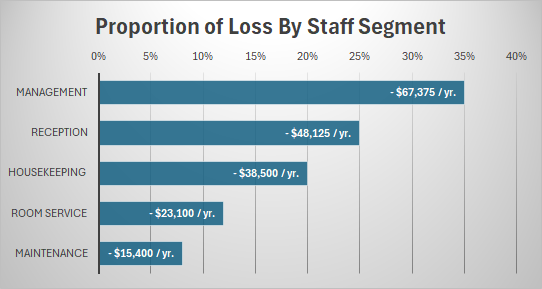
Statistics based on an average 100-room hotel with an estimated annual revenue around $3,500,000 (Based on 65% occupancy and $147 average daily rate) and an estimated annual loss around $192,500 (Calculated at a median 5.5% loss).
Segment Breakdown & Solutions
1. Management & Back Office: 35% ($67,375 / year)
The Threat: While theft by management has the lowest frequency, it yields the highest dollar amount per incident. This includes embezzlement from the main vault, payroll fraud, vendor kickbacks, and overriding accounting software.
The Product Solution: Mitigating this requires strict financial controls, including heavy-duty Commercial Depository Safes that separate cash drops from back-office management, ensuring no single manager has access to uncounted funds without a dual-auditor present.
2. Reception / Front Desk: 25% ($48,125 / year)
The Threat: High-frequency liquid cash skimming. This includes "ghosting" rooms (renting a room for cash to a walk-in and leaving it off the PMS system), voiding valid cash transactions, and processing fraudulent refunds to personal credit cards.
The Product Solution: Mandating physical, sequentially Numbered Registration Cards with signatures to audit actual occupancy vs. system occupancy. Utilizing Drop Boxes for secure shift-change cash deposits ensures night auditors cannot alter the till once their shift ends.
3. Housekeeping: 20% ($38,500 / year)
The Threat: "Micro-theft" that goes unnoticed because it happens in small daily increments. This includes stealing bulk amenities (toiletries, toilet paper, linens) for personal use or resale. Mismanaged master keys also open the hotel up to massive guest property theft liability.
The Product Solution: This is where Key Control Cabinets are paramount. If an item goes missing from a room or storage closet, the GM must be able to audit exactly which housekeeper checked out the master key for that floor. Staff Lockers are also critical to keeping personal employee bags separated from hotel inventory.
4. Room Service / Food & Beverage: 12% ($23,100 / year)
The Threat: "Sweethearting" (giving free meals/drinks to friends), consuming unrecorded food, unauthorized premium liquor pouring, and walking out with commercial silverware or glassware.
The Product Solution: Securing the liquor cabinets and walk-in freezer rooms by keeping the access keys locked in a Wall-Mounted Key Cabinet that only the F&B Director can access, and using Lock Boxes for premium inventory.
5. Maintenance & Engineering: 8% ($15,400 / year)
The Threat: Removing expensive power tools, plumbing hardware, batteries, and bulk copper wire for personal home projects or side-jobs off-property.
The Product Solution: Maintenance directors need Lock Boxes in the engineering room to sign out expensive tools. Furthermore, implementing physical Carbonless Maintenance Request Forms creates a verifiable paper trail to track exactly which parts were requested and used for a specific room repair.
Hotel Security Lock Boxes
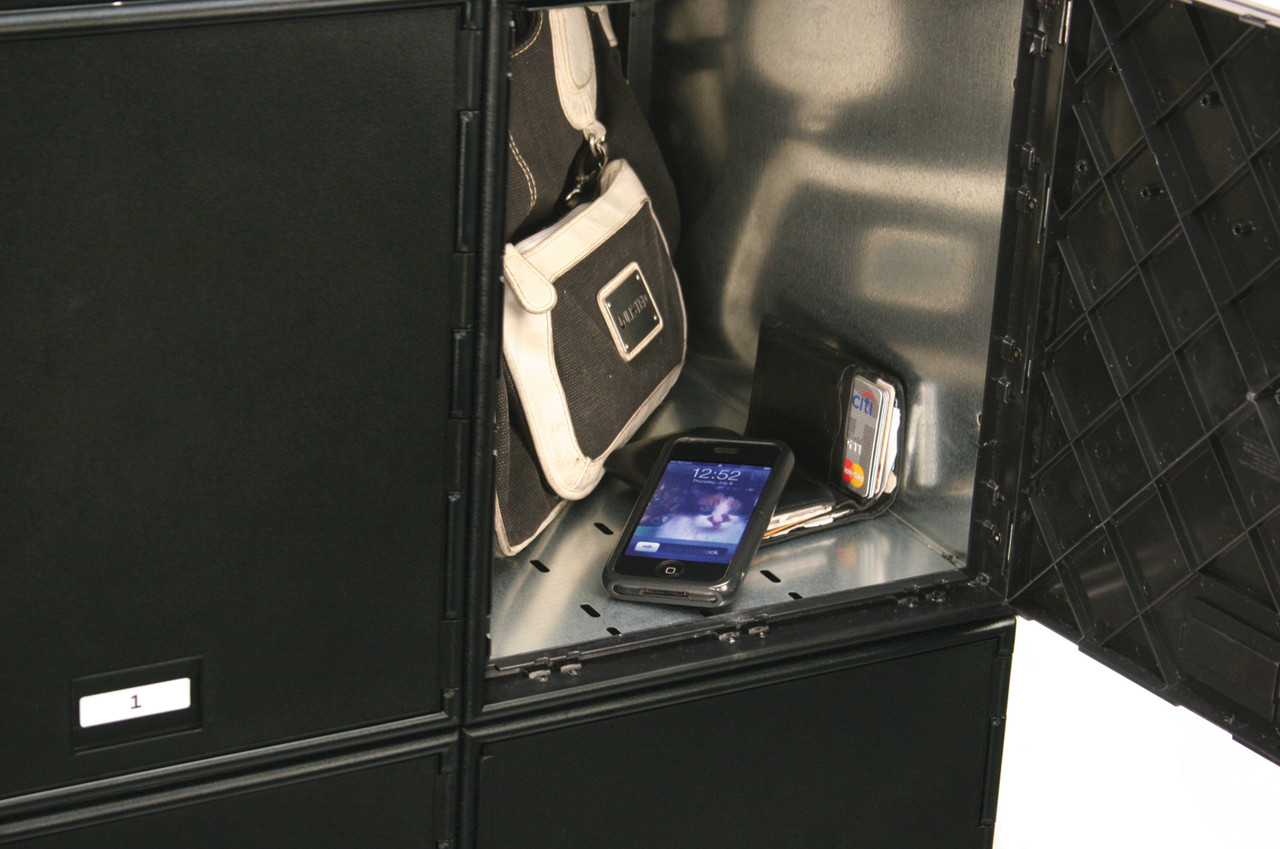 |
These Security Lock-Boxes will meet all of your storage or security needs. Perfect for hotels, schools, offices, restaurants or anywhere employees need to store their personal items. Also recommended for storage to check in/out expensive tools used by hotel maintenance. They are available with four different compartment sizes and may be table-, floor- or wall-mounted. Each lock box unit offers your choice of 3 lock options and 2 labeling options. |
Additional Security Audit Points
Protecting your property requires a comprehensive evaluation of your daily operational workflows. Use this checklist to identify common vulnerabilities and implement solutions using heavy-duty hardware found in the office and lobby category:
- Unsecured key returns at the front desk create a significant security vulnerability, allowing unauthorized individuals the opportunity to easily swipe used physical keys right off the counter. To prevent this, properties should install a tamper-proof hotel key drop box directly at the front desk. Alternatively, providing an express checkout drop box near the lobby exit offers departing guests a fast, secure method for key returns while ensuring those physical access credentials remain safely locked away from opportunistic thieves.
- Employee-on-employee theft in unsecured breakrooms creates a significant vulnerability that can severely damage workplace trust and morale. To mitigate this issue, management should provide secure hotel staff lockers so employees can safely lock up their personal belongings during their shifts. Implementing this dedicated storage ensures that personal bags don't mix with hotel inventory, which protects staff valuables while simultaneously eliminating a common method used to conceal stolen company assets.
- A lack of anonymous reporting channels creates a dangerous blind spot for management, as staff members may hesitate to speak up about security issues due to a fear of retaliation. To solve this problem, properties should mount a locking suggestion box for employees in a discrete staff area. Providing this secure, confidential avenue allows honest workers to safely and anonymously report internal theft, lost keys, or suspicious behavior without exposing themselves to workplace conflict.
- The unauthorized use of crisis tools presents a severe security liability for any hotel property. While an emergency door opening tool is absolutely vital for resolving life-safety situations, it becomes exceptionally dangerous if it falls into the wrong hands. To mitigate this risk and prevent unauthorized room access, management must ensure that this specialized equipment is strictly inventoried and securely locked away from general staff access, guaranteeing it is only deployed by authorized personnel during genuine emergencies.
- Daily wear and tear compromising entryways creates a subtle but significant security vulnerability that can slowly degrade a property's physical access points over time. To combat this issue, management must protect the structural integrity of their doors by installing commercial door kick plates and commercial door push plates. Preventing this continuous physical degradation ensures that critical latching and locking mechanisms remain perfectly aligned and secure, which is absolutely essential to maintain comprehensive lobby-level facility protection.
Hotel 40-Key Secure Cabinet With Digital Lock
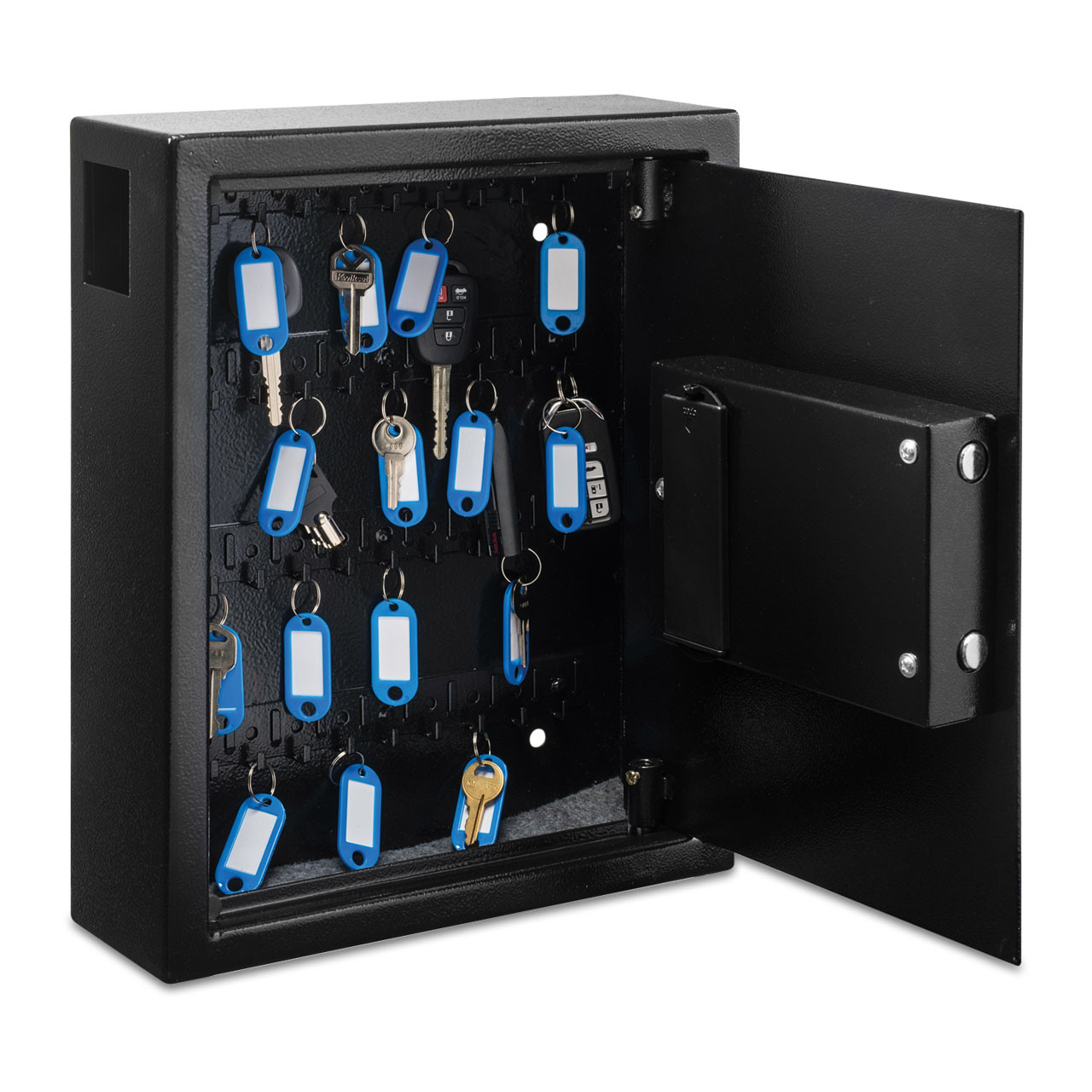 |
The easy to operate 40-Key Cabinet With Digital Lock opens with a secret pin code that can be changed as many times as you'd like. Cabinet comes equipped with a buzzer, LED lights and pre-drilled holes for mounting. Constructed of a durable, scratch resistant steel. Includes mounting hardware and 2 override keys. This cabinet provides the ultimate key control security for your hotel. |
Focus On Hotel Back-Office Security
While the lobby is the welcoming face of your hotel, your back-office security is the fortress that protects its most valuable operational assets. This restricted area requires uncompromising, audit-compliant standards to keep the property running safely.
To maintain impeccable organization and compliance practices, properties must utilize high-security hotel key control cabinets. By installing a lockable, wall mounted master key cabinet, management can enforce strict sign-in/sign-out logs, ensuring an unbreakable chain of custody for every master and sub-master key. Furthermore, cash accumulation during busy shifts must be addressed. Large daily cash deposits and sensitive financial documents should never be left sitting in a desk drawer. Minimizing loose cash at the register by equipping your staff with a front desk depository safe or a heavy-duty commercial cash drop safe ensures that once money is deposited, it remains completely inaccessible until authorized top-level management or armored transport retrieves it.
Hotel Depository Safes
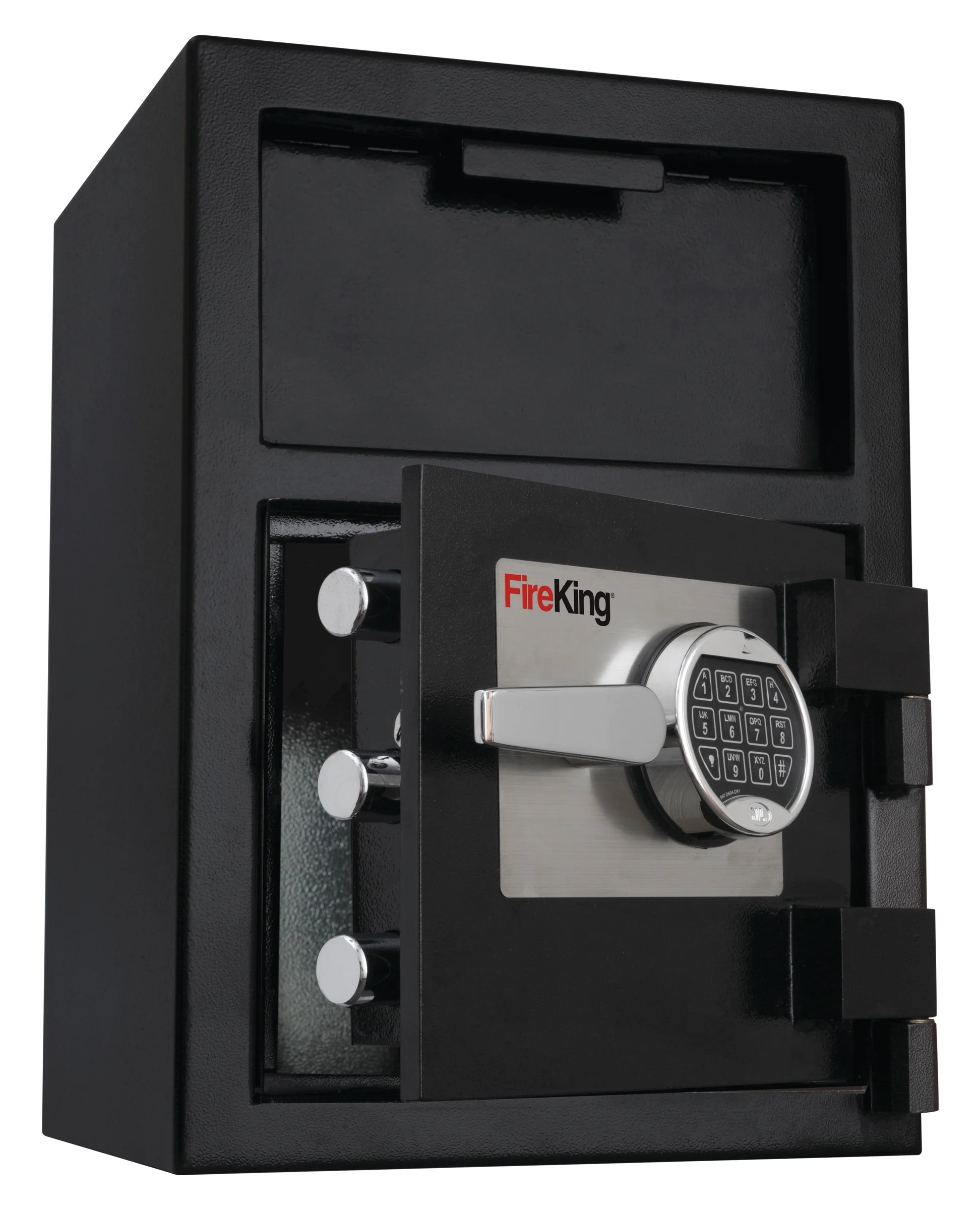 |
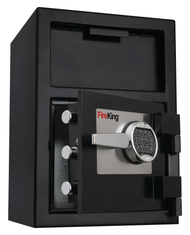
Fire King postal-style depository safes help prevent theft in retail and restaurant settings. The 6" drop slot allows the user to make bank bag type drops. Features a programmable electronic lock with batteries for lock included. These ultra secure safes have an anti-fish hopper to prevent hand grabs through the depository door, a full-length, hinge-side heavy-duty deadbolt, drill resistant hard plate behind the lock and a bolt down kit included with pre-drilled anchor holes to prevent robberies by safecrackers. |
Hotel Office Security And Access Q & A
What is the cost of losing a hotel master key?
Fact/Data: If a master key is lost/stolen, the industry standard requires rekeying all locks it accessed. For a 100-room hotel, this can cost between $2,500 and $15,000 in locksmith labor and hardware.
How much revenue is lost to hotel employee theft?
Fact/Data: The U.S. Chamber of Commerce estimates that the hospitality sector loses roughly 5-6% of annual revenue to internal theft, making strict cash handling (Drop Boxes) and key control (Cabinets) high-ROI investments.
Conclusion
A single misplaced key or an unmonitored cash drawer is an operational failure waiting to happen. The massive financial risk of lost master keys and internal theft can quietly erode your hotel's profitability and irreparably damage your reputation. By conducting regular risk assessments and investing in commercial-grade, tamper-proof hardware—from heavy-duty back-office safes to audit-compliant key control systems—you fortify your property against costly vulnerabilities. Don't let a simple oversight turn into a $2,500 mistake; take control of your hotel's security policies and protect your bottom line today.
Where To Buy
Go to the Hotel Security & Access page and click on the subcategory of products you need. Then, add your items to the shopping cart.
Account Setup and Registration takes only a few minutes when registering your account.
- For more information, visit www.nathosp.com
- To speak with a representative, call 1-800-526-8224 (8AM - 6PM CST)
- To email customer service, send a message to [email protected]
